
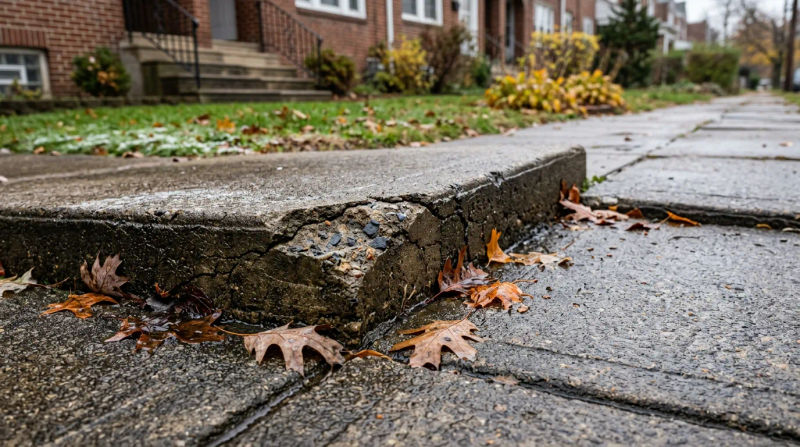
As a foreman with nearly two decades of experience working with concrete here in Delaware County, I’ve seen how the change of seasons affects our homes. Here in October, as the leaves turn and begin to fall, it’s easy to get caught up in the beauty of autumn. But for homeowners, this season also brings a specific set of challenges for our walkways. You might be out for a stroll, enjoying the crisp air, when your foot suddenly catches on the edge of a sidewalk slab. Underneath a blanket of fresh leaves, a small lift in the concrete has become a hidden danger. That slight wobble or unevenness you noticed over the summer can become a significant concrete sidewalk trip hazard overnight, especially as the first frosts begin to work their way into the wet ground.
In historic neighborhoods like Prospect Park, with its beautiful pre-war homes and mature trees, these issues are especially common. The charming, pedestrian-friendly routes that define the area can quickly show signs of age. This is the perfect time to take a close look at your property’s concrete, before the winter freeze sets in for good.
Common Signs and Symptoms
Identifying a problem early is the key to preventing a small issue from becoming a large, expensive one. From my experience on job sites, the most obvious sidewalk heaving signs are often ignored until they become impossible to miss. Take a walk around your property and look for these tell-tale indicators:
- Uneven Slabs: This is the most common and dangerous sign. One concrete panel is noticeably higher than the adjacent one, creating a lip or edge. A difference of even a quarter-inch is enough to catch a toe, but lifts of a half-inch or more are serious liabilities.
- Tilting or Sloping: Does a section of your sidewalk look like it’s leaning to one side? This often happens when the soil underneath has washed away or settled, causing the slab to lose its support and tilt. You may notice water pooling on one side after it rains.
- Visible Cracks: While small hairline cracks can be a normal part of concrete aging, larger, spiderweb-like cracks or cracks that run the full width of a slab are a red flag. These indicate significant stress, often from movement below the surface.
- Gaps Between Panels: The expansion joints between sidewalk slabs are designed to allow for some movement. However, if these gaps are widening or if soil and weeds are pushing up through them, it suggests the slabs are shifting apart.
- Spalling or Flaking: If the surface of your concrete is chipping or flaking away, it can be a sign of water damage. When water penetrates the concrete and freezes, it expands, popping off the top layer. This weakens the slab and makes it more susceptible to further damage.
- Difficulty Shoveling: As you prepare for winter, think back to last year. Did your snow shovel constantly catch on the edge of a sidewalk slab? This is a clear, practical sign of a Prospect Park uneven sidewalk that needs attention.
What Causes This Problem
Understanding what causes your sidewalk to heave, sink, or crack is the first step toward a lasting solution. It's rarely the concrete itself that fails; more often, it’s the ground underneath it. Our crews are trained to diagnose these root causes, not just patch the surface symptoms.
Freeze-Thaw Cycles The primary culprit behind sidewalk movement in our climate is water. October and November often bring heavy rains, saturating the soil base beneath your concrete slabs. When temperatures drop below 32°F, that trapped water freezes and expands with immense force - up to 9% in volume. This expansion lifts the concrete slab. This is the essence of freeze thaw sidewalk movement. When the temperature rises and the ice thaws, the soil settles back down, but often not uniformly, leaving voids. Over time, this repeated cycle can push slabs further and further out of alignment.
Tree Root Growth Prospect Park is known for its beautiful, mature street trees, many of which were planted when the neighborhood’s classic American Foursquare and Bungalow homes were built before the 1940s. While these trees add immense character, their roots can be a sidewalk’s worst enemy. As roots grow in search of water and nutrients, they can expand directly underneath a concrete slab, exerting slow, steady pressure that eventually lifts and cracks it from below.
Poor Subgrade and Drainage A sidewalk is only as stable as the ground it’s poured on. If the original installers didn't properly compact the soil and lay a solid gravel base, the ground can settle or shift over time. This is particularly true for older properties where installation standards may have been different. Furthermore, poor drainage from downspouts or improper yard grading can channel water directly to the base of your sidewalk, accelerating erosion and exacerbating the effects of freeze-thaw cycles. The heavy leaf fall this time of year can clog gutters and drains, forcing water into these vulnerable areas.
When to Call a Professional
As a homeowner, it’s tempting to look for a quick DIY fix. While sealing a minor crack is a manageable task, addressing heaving, sinking, or widespread cracking is a job for experienced professionals. The real problem lies beneath the surface, and a cosmetic patch won't solve it.
Consider calling for a professional assessment if you notice:
- A trip hazard of a half-inch or more: This is a significant safety and liability issue that needs to be addressed promptly. A simple grinding of the edge is only a temporary fix that doesn’t stop the underlying movement.
- Multiple uneven slabs: If more than one section of your sidewalk is affected, it points to a systemic issue with the subgrade, drainage, or nearby tree roots that requires a comprehensive evaluation.
- Water pooling consistently: This indicates a grading or settlement problem that will only get worse. An experienced crew can determine if the slab can be lifted or if replacement with a properly prepared base is necessary.
- Large, structural cracks: Cracks you can fit a key into or that span the entire slab are signs that the concrete's integrity is compromised.
Our technicians follow standardized processes to diagnose these issues correctly. An inspection involves more than just looking at the concrete; it includes assessing the surrounding landscape, drainage patterns, and soil conditions. This allows us to recommend the right solution - whether it’s mudjacking (slab lifting), removal and replacement with a properly engineered sub-base, or strategic root management.
Conclusion
An uneven sidewalk is more than just an eyesore; it’s a developing safety hazard that can worsen dramatically during the winter. The sidewalk heaving signs you see in the fall - the slight lift, the small crack, the tilting slab - are warnings. The combination of autumn rains and the first hard freezes creates the perfect conditions for freeze thaw sidewalk movement, turning a minor issue into a major concrete sidewalk trip hazard.
By taking a few minutes to inspect your walkways now, you can identify problems before they become locked in by frozen ground. Acting early not only protects your family and neighbors from falls but can also prevent more extensive and costly damage down the road. Don't wait for the snow to hide the problem.
If you notice any of these signs, contact a local concrete professional for an inspection. They can provide an expert diagnosis and recommend a durable, long-term solution.