

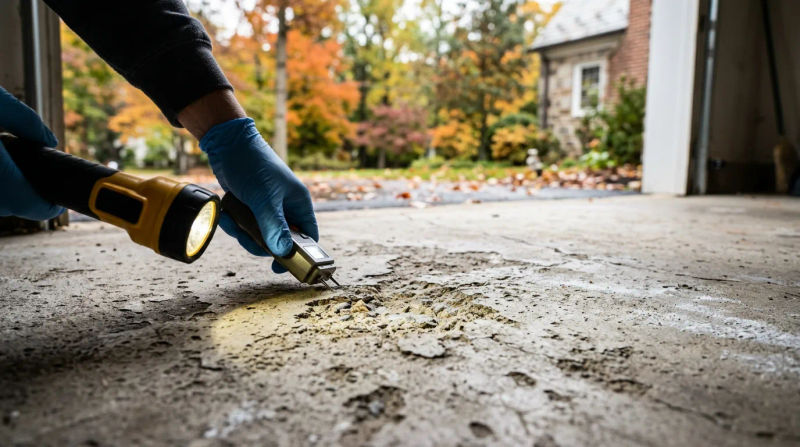
As an experienced concrete foreman, I’ve seen firsthand how the change of seasons affects homes in our area. You might be out in your garage this October, sweeping up the first heavy fall of leaves, and notice something that wasn’t there over the summer: a fine layer of concrete dust, small pits, or even larger patches where the smooth surface has flaked away. It’s a common discovery for homeowners, and it’s often the first sign of a problem known as concrete spalling.
This issue, particularly garage floor spalling, is more than just a cosmetic nuisance. It’s a signal that the surface of your concrete is breaking down. Ignoring it can lead to more significant structural issues and costly repairs down the road. Understanding what you’re seeing and why it’s happening is the first step toward protecting your property.
Common Signs and Symptoms
Concrete spalling can start subtly and worsen over time. When our technicians perform an inspection, we look for a range of indicators, from early-stage scaling to advanced deterioration. Here’s what you should keep an eye out for on your garage floor:
- Scaling or Flaking: This is the earliest stage. You'll see thin layers of the concrete surface peeling or flaking off, similar to sunburned skin. It often creates a fine dust that you have to sweep up repeatedly.
- Pitting and Pockmarks: As the damage progresses, you’ll notice small, shallow holes or craters forming on the surface. These pits can collect water, dirt, and de-icing salts, which accelerates the damage.
- Exposed Aggregate: Healthy concrete has a smooth top layer of cement paste. When spalling becomes severe, this layer breaks away entirely, exposing the rough stones and sand (the aggregate) that make up the bulk of the concrete slab. The floor will look and feel coarse.
- Pop-Outs: These are small, cone-shaped fragments that break away from the surface. A pop-out is often caused by a piece of porous or weak aggregate just below the surface that absorbs water, freezes, and expands, pushing a piece of the surface material out.
- Crazing and Map-Cracking: While not spalling itself, a network of fine, shallow cracks on the surface can be a precursor. These cracks allow more water to penetrate the slab, leading to spalling when temperatures drop.
What Causes This Problem
Understanding the root cause is critical to finding a lasting solution. In our region, several factors contribute to concrete degradation. The primary culprit behind most concrete spalling causes Bala Cynwyd residents face is moisture combined with temperature fluctuations.
One of the most significant factors is freeze thaw concrete damage PA is known for. The process is straightforward but destructive:
- Water from rain, snowmelt, or washing your car soaks into the porous surface of the concrete.
- When the temperature drops below freezing, as it starts to do in late fall, this trapped water turns to ice and expands by about 9%.
- This expansion exerts immense internal pressure, breaking apart the cement paste that holds the concrete together.
- As this cycle repeats throughout the winter, the surface progressively weakens, leading to the flaking and pitting you see.
Another major contributor, especially for a garage floor, is de-icing salt. The salt and brine your car brings in from treated winter roads can cause two problems. First, it chemically attacks the concrete. Second, it lowers the freezing point of water, which means the concrete experiences more freeze-thaw cycles than it would otherwise, even when air temperatures are just below freezing.
Finally, the original installation quality plays a role. In many of the beautiful, historic homes found in Bala Cynwyd, some of which were built in the pre-1940s Tudor and Craftsman styles, the original concrete may not have been installed with the modern techniques and admixtures we use today. Common installation issues that can lead to spalling include:
- A high water-to-cement ratio, which creates a weaker, more porous surface.
- Improper finishing techniques, such as troweling the surface while bleed water is still present, which traps water and weakens the top layer.
- Inadequate curing, which prevents the concrete from reaching its full potential strength and durability.
When to Call a Professional
Once you’ve identified spalling, the next question is what to do about it. The decision between a DIY patch and calling for professional help often depends on the extent and depth of the damage.
For very minor, superficial scaling affecting a small, isolated area, a homeowner might attempt a patch with a kit from a hardware store. However, these patches often fail within a season or two because they don’t address the underlying cause and may not bond properly to the deteriorating surface.
You should strongly consider contacting an experienced professional if you observe any of the following:
- Widespread Damage: If the spalling covers a significant portion of your garage floor, it indicates a systemic problem that a simple patch won’t solve.
- Deep Pitting: If the spalling is deeper than a half-inch or you can see the aggregate stone clearly, the structural integrity of the surface is compromised.
- Exposed Rebar: If you see the steel reinforcement grid (rebar), this is a serious issue. The rebar will rust and expand, causing further cracking and spalling. This requires immediate professional attention.
- Rapidly Worsening Condition: If you notice the problem getting significantly worse each year, it’s a sign that the destructive cycle is well-established and needs to be stopped.
When you’re wondering how to fix spalling concrete floor correctly, the answer lies in proper surface preparation and the use of professional-grade materials. Our trained crews follow a standardized process that typically involves mechanically grinding the floor to remove all unsound concrete and create a clean, porous surface for the new material to bond to. From there, a high-strength polymer-modified cementitious overlay or an epoxy coating system can be applied. These solutions not only repair the damage but also create a dense, durable, and less permeable surface that is far more resistant to future freeze-thaw cycles and salt intrusion.
Conclusion
Your garage floor is more than just a place to park your car; it’s a functional part of your home’s foundation. Spotting garage floor spalling early, especially as we head into the colder months in Bala Cynwyd, is key to preventing minor flaws from becoming major headaches. The flaking and pitting you see are clear signs that moisture and freeze-thaw cycles are taking a toll on your concrete.
While small patches might seem like a quick fix, they rarely last. Addressing the root cause with proper surface preparation and professional-grade repair materials is the only way to ensure a durable, long-lasting finish. Don't wait for the damage to spread.
If you notice any of these signs, contact a local concrete contractor for an inspection. A qualified professional can assess the condition of your slab and recommend the most effective course of action.