

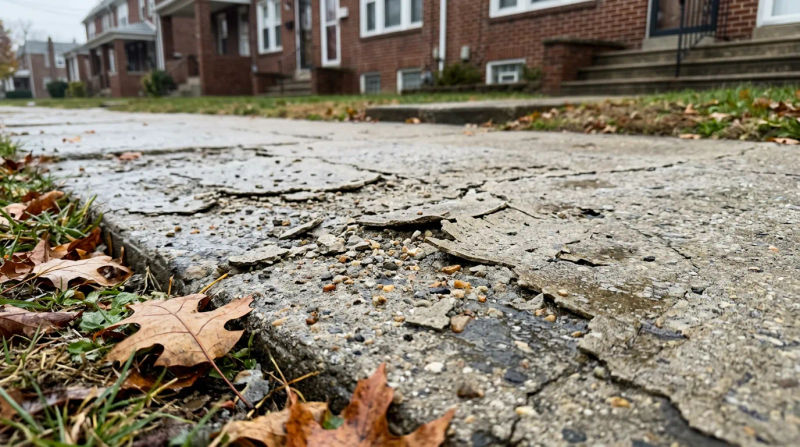
As a concrete foreman with nearly two decades of experience in Delaware County, I've seen how the change of seasons affects exterior concrete. Here in Sharon Hill, as you're out sweeping the last of the fallen leaves from your walkway, you might notice something unsettling. The surface of your concrete sidewalk looks... different. It might appear dusty, flaky, or like a thin top layer is peeling away. This isn't just normal wear and tear; it's a specific issue called scaling, and with October’s first freezes just around the corner, it's a warning sign you shouldn't ignore.
That seemingly minor surface flaking can quickly worsen as trapped moisture begins its destructive cycle of freezing and thawing. Understanding what you're seeing and what's causing it is the first step toward protecting your property's value and safety.
Common Signs and Symptoms
Sidewalk scaling can range from a minor cosmetic issue to a serious structural problem. In its earliest stages, it looks like a fine powder or small, thin flakes coming off the surface. When you sweep your sidewalk, you might notice an unusual amount of sandy grit. This is the very top layer of cement paste breaking down.
As the condition progresses, you'll see more distinct signs:
- Pitting and Flaking: Small pits and pockmarks will appear, eventually leading to larger flakes or chips of the surface breaking loose. A Sharon Hill PA flaking concrete sidewalk often shows this most clearly after the first few hard frosts.
- Exposed Aggregate: In moderate to severe cases, the entire top layer of cement paste erodes away, exposing the small stones (the aggregate) that make up the bulk of the concrete. The surface will become extremely rough and uneven.
- Low Spots Worsen: You'll typically find the worst scaling in areas where water tends to puddle - low spots in the middle of a slab, along the edges, or near downspouts. Heavy leaf fall in autumn can exacerbate this by trapping moisture against the concrete, preventing it from drying out before a freeze.
- Discoloration: The affected areas may look lighter or darker than the surrounding concrete, creating a mottled, unappealing appearance.
What Causes This Problem
Surface scaling is almost always a moisture-related issue, specifically driven by the expansion of freezing water within the concrete's pores. However, several underlying factors determine why one sidewalk fails while another remains intact for decades. These are the primary freeze thaw concrete scaling causes our technicians encounter.
1. The Freeze-Thaw Cycle: This is the direct culprit. Water penetrates the microscopic pores in the concrete surface. When temperatures drop below 32°F, that water freezes and expands by about 9%. This expansion creates immense internal pressure that breaks down the cement paste. As it thaws, more water enters, and the cycle repeats, progressively destroying the surface layer by layer. Sharon Hill’s typical cold-season pattern - wet ground followed by sudden cold snaps - creates the perfect conditions for this destructive process.
2. Improper Finishing: During installation, if too much water is added to the surface while troweling (a practice meant to make finishing easier), it can dramatically increase the water-to-cement ratio of that top layer. This creates a weak, porous surface that is highly susceptible to freeze-thaw damage.
3. Inadequate Curing: Fresh concrete doesn't just dry; it cures. This chemical process requires moisture to build strength and durability. If a new sidewalk cures too quickly - due to hot sun, wind, or a lack of a proper curing compound - the surface never achieves its full design strength, leaving it vulnerable from day one.
4. Use of De-Icing Salts: While necessary for safety, many common de-icers (especially rock salt, or sodium chloride) can be harsh on concrete. They increase the frequency of freeze-thaw cycles by melting ice, which allows the resulting saltwater to penetrate the concrete before it refreezes. Some chemicals also cause a mild chemical reaction that can degrade the surface over time.
5. Poor Drainage: Concrete that is constantly saturated is at high risk. If a sidewalk wasn't installed with a proper slope, or if the surrounding landscape directs water onto it, it will absorb excess moisture. Many older properties in Sharon Hill, with their beautiful pre-1940s Victorian and Craftsman architecture, may have original walkways that have settled over decades, creating flat spots or low areas where water now collects.
6. Outdated Concrete Mixes: Modern concrete designed for our climate contains microscopic air bubbles, a feature called air-entrainment. These tiny pockets give freezing water a place to expand without damaging the concrete. Many older sidewalks, particularly those poured decades ago for the classic homes that define Sharon Hill's neighborhoods, were installed before air-entrainment was a standard practice, making them inherently more vulnerable to scaling.
When to Call a Professional
Deciding whether to address scaling yourself or call for expert help depends on the severity of the damage.
For very minor, early-stage scaling (light dusting on a relatively new slab), the best course of action is prevention. One of the best ways for how to prevent concrete surface scaling is to apply a high-quality penetrating sealer. This helps keep water and de-icing salts from soaking into the surface. Keeping the surface clear of debris like wet leaves is also critical.
However, you should contact an experienced professional when you observe the following:
- Exposed Aggregate: If you can see the stones in the concrete, the surface layer has been completely lost. A simple sealer won't fix this. This often requires a professional resurfacing overlay or, in severe cases, replacement.
- Trip Hazards: When scaling becomes so severe that the surface is uneven, it poses a significant safety risk. Our crews prioritize creating safe, accessible surfaces, and this is a clear sign that a repair is needed.
- Rapidly Worsening Condition: If you noticed minor flaking last spring and now see large patches of damage, the problem is accelerating. A professional can diagnose the root cause - whether it's poor drainage or a material failure - and propose a lasting solution.
- Deep Cracking or Heaving: If scaling is accompanied by larger structural issues like wide cracks or sections of the sidewalk lifting, it points to a problem with the slab's base. This requires a comprehensive evaluation that goes beyond a simple surface repair.
An experienced team can assess the full extent of the damage, determine the underlying cause, and explain the most effective repair options, from durable overlays to partial or full slab replacement.
Conclusion
That flaky, peeling surface on your sidewalk is more than just a cosmetic flaw; it’s a sign that the harsh winter weather is taking its toll on your concrete. Sidewalk scaling is caused by water penetrating the surface and repeatedly freezing and thawing, a process often accelerated by improper installation, poor drainage, or the use of de-icing salts. While minor issues can sometimes be slowed with sealers, significant damage that exposes aggregate or creates uneven surfaces requires professional attention.
Ignoring the initial signs of a Sharon Hill PA flaking concrete sidewalk in the fall can lead to much more extensive and costly damage by the time spring arrives. Acting early to address the problem saves money and ensures your walkways remain safe and functional for years to come.
If you notice any of these signs on your property, we recommend contacting a local, qualified concrete professional for a thorough inspection and to discuss your options.