

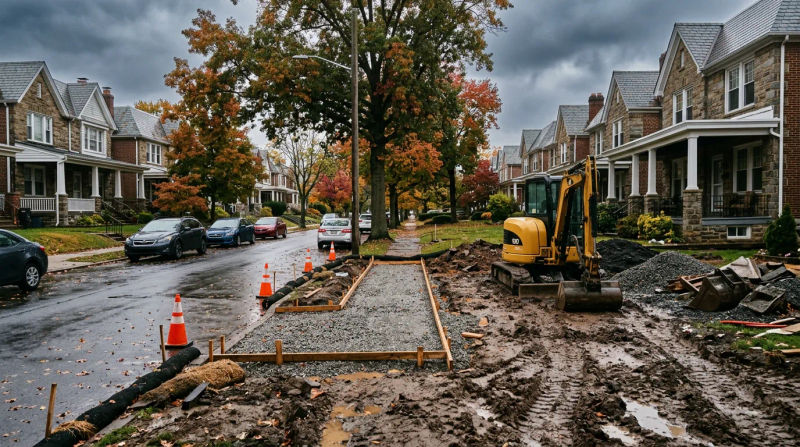
As a Senior Concrete Foreman with Chris Falcone Concrete, I’ve spent the better part of two decades working on properties all over Delaware County. There’s something special about working in Drexel Hill, with its classic, sturdy homes and tight-knit community feel. But those same characteristics - the pre-war construction, established landscapes, and dense lots - create unique challenges, especially when the seasons change. In the fall, as the leaves start to turn and the air gets crisp, many homeowners think about tackling that new patio, walkway, or driveway project. It’s a great time for it, but only if your contractor understands what’s happening beneath the surface. The autumn rains can turn our local soil into a real headache if not managed properly, and that’s where local expertise truly matters.
Drexel Hill Weather Challenges
Fall in Drexel Hill brings a specific set of environmental factors that directly impact any concrete project. It’s not just about cooler temperatures; it’s about water. October and November often bring consistent, soaking rains that saturate the ground. Unlike a quick summer thunderstorm, this prolonged wetness creates deep moisture in the soil that can compromise the stability of a concrete project for years to come.
At Chris Falcone Concrete, we see this often in Drexel Hill. The area's soil often has a high clay content, which holds water like a sponge. When we begin a Drexel Hill excavation, we’re not just digging into dirt; we're often dealing with a soupy mix that has very little structural integrity. Compounding this issue is the heavy leaf fall. Clogged gutters and storm drains mean that rainwater doesn't get carried away efficiently. Instead, it pools around foundations and saturates the very areas where we need to work.
Another challenge is the shortening daylight. With the sun setting earlier, our work window shrinks. This compressed schedule means there’s less time for a wet subgrade to naturally dry out. A less experienced crew might rush the job, pouring concrete on a soft, unstable base. That’s a recipe for cracking, sinking, and heaving down the road. Proper fall excavation planning for concrete isn't just a good idea here; it's a necessity.
Best Practices for Local Homeowners
As a homeowner, understanding the process helps you ask the right questions and ensure your project is built to last. The single most important factor for durable concrete is what’s underneath it. The prepared ground, or subgrade, is the foundation of your foundation.
Here’s what proper wet soil concrete base prep looks like in our area:
- Proper Excavation Depth: We often need to excavate deeper in the fall to get past the most saturated topsoil and reach a more stable layer. On many Drexel Hill properties, especially those with older, undocumented fill, this requires careful evaluation on-site.
- The Right Stone Base: Simply pouring concrete on dirt is never an option, especially wet dirt. We use a specific grade of crushed stone, typically 2A modified stone, to create a stable base. This stone allows for drainage and creates a solid, interlocking layer that won't shift or sink. The depth of this stone base is adjusted based on the soil conditions we find during excavation.
- Achieving Proper Compaction: Spreading stone isn't enough. The base must be mechanically compacted in layers, or “lifts.” This meets the subgrade compaction requirements PA standards and is crucial for preventing future settlement. Our trained crews use plate compactors to ensure the base is dense and unyielding before any concrete is poured.
- Managing Tight Access: Many of Drexel Hill's homes were built in the pre-1940s era, with twins and single-family homes situated close together. This often means narrow driveways and limited access to backyards. Our team at Chris Falcone Concrete has standardized processes for working in these tight spaces, using smaller equipment and careful planning to protect your property and your neighbor’s.
Before we even start, we advise homeowners to ensure their gutters are clear and downspouts are directed away from the project area. It’s a small step that can make a big difference in keeping the site as dry as possible.
Local Resources and References
While the heavy lifting of excavation and base preparation should be left to professionals, there are things homeowners can do to manage their property. Keeping your yard and drainage systems in good shape is a year-round task. For supplies like gutter guards, downspout extenders, or even a good quality leaf blower, local stores are a great resource. You can find a wide selection of these items at the Lowe's Home Improvement right here in the area. Taking proactive steps to manage water on your property helps protect your home’s foundation and makes our job easier when it’s time for a new concrete project.
Many of the homes in our community are characterized by their beautiful, established yards. We understand that preserving your landscaping is a top priority. Part of our site evaluation process involves planning our excavation path to minimize disruption to your lawn and garden beds, a detail that a non-local company might overlook.
Choosing a Local Expert
When you’re investing in a concrete project, you're investing in your home’s value and functionality for decades to come. Choosing a contractor who understands Drexel Hill’s specific challenges is critical. A company from outside the area might apply a one-size-fits-all approach that works fine in sandy, well-drained soils, but fails miserably in our wet, clay-heavy environment.
Chris Falcone Concrete has served Drexel Hill homeowners for years. We’ve worked on the stone-front twins and classic brick singles that define our neighborhoods. Our technicians know what to look for when they evaluate a site. They can spot signs of poor drainage, identify soil types by sight and feel, and adjust the project plan accordingly. This isn’t something you learn from a textbook; it comes from years of hands-on experience right here in Delco.
From my perspective as a foreman, the difference is in the process. We don’t just show up and start digging. We have an organized workflow that includes a thorough site assessment, a clear plan for water management, and a standardized process for building a stable subgrade. This reliability and expertise are why so many of your neighbors have trusted us with their homes.
When it comes to Drexel Hill excavation, it’s about more than just moving dirt. It's about understanding the land, the weather, and the homes that make our community unique. It’s about building something that will last, no matter what our Pennsylvania weather throws at it.
If you're planning a concrete project this fall, don't let the wet weather compromise the quality of your investment. When it comes to concrete in Drexel Hill, the team at Chris Falcone Concrete has the local expertise and proven processes to get the job done right, starting from the ground up. Reach out to us for a consultation, and we’ll be happy to walk you through the right way to build on solid ground.