

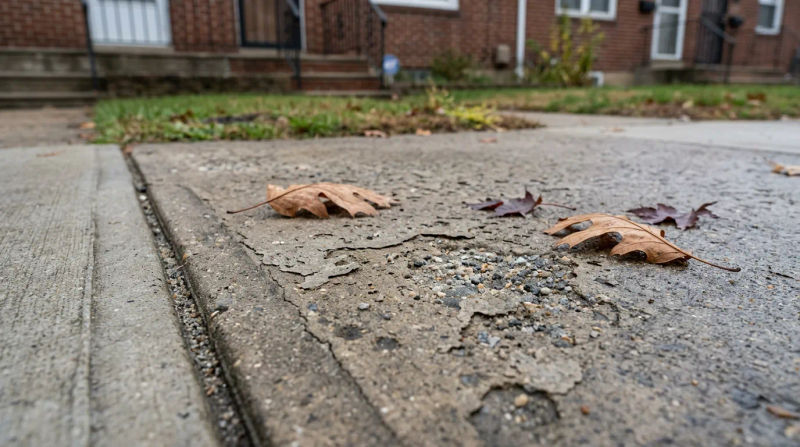
As a concrete foreman with nearly two decades of experience in Delaware County, I've seen how the first cold snaps of October can reveal hidden problems in our sidewalks. You might be out sweeping away the heavy fall of leaves from your walkway in Darby, enjoying the crisp air, and notice something is off. The surface that was smooth last spring now looks flaky and rough, almost like it's peeling. This isn't just dirt or wear and tear; it's often the first sign of concrete scaling, a problem that can get much worse once winter's freeze-thaw cycles truly take hold.
Many of the homes in Darby, particularly the beautiful brick and stone rowhomes from the pre-1940s era, have stoops that lead directly onto public sidewalks. These pedestrian routes see constant foot traffic, and their integrity is crucial for neighborhood safety. Noticing the early signs of deterioration now can save you from a hazardous, crumbling surface by February.
Common Signs and Symptoms
Identifying sidewalk concrete scaling early is key to preventing more extensive damage. When our technicians inspect a sidewalk, we're trained to spot subtle indicators before they become major issues. Here are seven common signs you can look for on your own property:
- Flaking Surface Mortar: The most common sign is the loss of the very top layer of cement paste. It might look like thin flakes or sheets are peeling away, revealing a different texture underneath. It often starts in small patches and expands.
- Exposed Aggregate: As the top layer of mortar wears away, the small stones (aggregate) mixed into the concrete become visible. If your sidewalk is starting to look like a gravel path and feels rough underfoot, you're seeing exposed aggregate due to scaling.
- A Pitted or Pockmarked Texture: Scaling can create small, shallow depressions across the concrete surface. These little pockmarks may seem minor, but they are weak points that hold water, accelerating the damage with every freeze.
- A Sandy or Gritty Feel: Run your shoe over the surface. A healthy sidewalk should feel relatively smooth. If it feels sandy and leaves a dusty, gritty residue on your shoes, it means the surface is actively deteriorating.
- Shallow Water Pooling: After it rains, check if small puddles are forming where they didn't before. The shallow depressions caused by scaling can collect water, which is a major red flag as we head into freezing temperatures.
- Discoloration and Patchiness: Scaled areas often appear lighter or darker than the surrounding, undamaged concrete. This patchy appearance is a clear visual cue that the surface integrity is compromised.
- Crumbling Edges and Joints: Pay close attention to the edges of the concrete slabs and the control joints cut into the sidewalk. These areas are particularly vulnerable, and scaling often begins here, leading to crumbling and chipping.
What Causes This Problem
Understanding the root cause of scaling is essential for finding a lasting solution. It's rarely a single issue but rather a combination of factors, especially here in Delaware County where our weather can be harsh.
Freeze-Thaw Cycles: This is the primary culprit. Water from rain or melting snow seeps into the microscopic pores of the concrete. When temperatures drop below freezing, that water turns to ice and expands by about 9%. This expansion exerts immense pressure from within, causing the surface to pop, flake, and scale. The repeated cycle of freezing and thawing throughout a Pennsylvania winter progressively destroys the concrete's surface. This is the main reason we see a surge in concrete scaling after freeze Darby homeowners report each spring.
De-icing Salts: While necessary for safety, many common de-icers can be brutal on concrete. Rock salt (sodium chloride) and other chemical de-icers increase the pressure of freeze-thaw cycles and can also cause chemical reactions that break down the cement paste. This salt damage on sidewalk concrete is especially prevalent on high-traffic public walkways.
Improper Installation Techniques: Sometimes, the problem dates back to the day the sidewalk was poured. If too much water was added to the concrete mix or if water was sprinkled on the surface during finishing to make it smoother, it creates a weak, porous top layer that is highly susceptible to scaling.
Age and Original Materials: Many sidewalks in Darby's historic neighborhoods were installed decades ago, before modern advancements like air-entrained concrete were standard. Air-entrainment involves adding microscopic air bubbles to the mix, which act as tiny relief valves for freezing water to expand into. Older concrete often lacks this protection, making it much more vulnerable.
It's also important to understand the difference between spalling vs scaling on sidewalks. Scaling is a surface-level issue, typically less than 1/8-inch deep. Spalling is more severe, involving larger chunks of concrete breaking away, often exposing the underlying rebar and signaling a deeper structural problem.
When to Call a Professional
While minor, isolated patches of scaling can sometimes be addressed with DIY resurfacing products, these are often temporary fixes that don't solve the underlying weakness. The problem usually returns the following winter, often worse than before.
You should consider contacting an experienced professional when you observe the following:
- The scaling is widespread: If the damage covers a significant portion of your sidewalk, a simple patch won't be effective.
- The aggregate is heavily exposed: A very rough, gravelly surface is a serious trip-and-fall hazard that needs to be properly addressed.
- You see signs of spalling: If chunks of concrete are breaking off, it indicates a more serious problem that requires a professional diagnosis.
- The problem is getting progressively worse each year: This is a sign that the concrete itself is unable to withstand our region's climate, and a simple overlay will likely fail.
A qualified professional won't just look at the surface. Our process involves a thorough inspection to diagnose the root cause. We assess the depth of the damage, the overall condition of the slab, and drainage issues. Based on this expert diagnosis, we can recommend a reliable, long-term solution, whether it's a high-strength polymer-modified overlay, a partial replacement, or a full removal and replacement with a properly formulated, air-entrained concrete mix designed for our climate.
Conclusion
Your sidewalk is more than just a path; it’s the welcome mat to your home and a key part of your neighborhood's safety and curb appeal. Concrete scaling might start small, but it's a progressive problem that will only worsen under the stress of a Darby winter. Ignoring those initial flakes and pockmarks can lead to a rough, unsafe, and unsightly walkway by the time spring arrives.
By taking a few minutes this fall to inspect your concrete for the early signs of scaling, you can get ahead of the problem. Addressing it now, before the ground freezes solid and the de-icing salts come out, is the most effective way to protect your property and ensure a safe passage for your family and neighbors.
If you notice any of these signs, contact a local concrete contractor for an inspection. An expert evaluation can provide peace of mind and a clear plan to restore the safety and appearance of your sidewalk.